While there are taxonomical differences between Bartle's Type and the Components mentioned in this presentation (i.e., Socializing and Role-Playing are not highly-correlated), I would argue that there are more important underlying theoretical differences in terms of how the two models conceptualize player motivations. I describe these differences in detail here.
People Don't Fit in Boxes
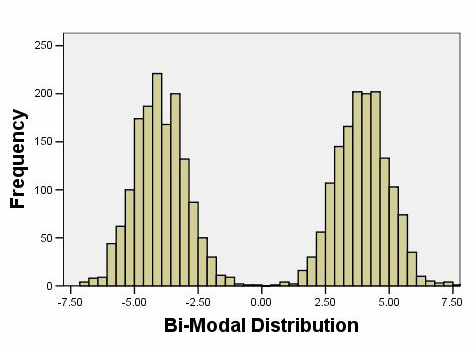
It only makes sense to have a Type called an Achiever if your population shows a bi-modal distribution of high Achievers and low Achievers. The following graph shows a hypothetical bi-modal distribution.
The problem is that bi-modal distributions seldom occur in personality, attitude or ability assessments. Almost all psychometric assessments follow a normal distribution (the bell curve). For example, the graph below is the histogram of the scores on the Achievement Component in the current data set of 3200 respondents. In other words, most people fall along the mean and there are few individuals who fall along the ends of the spectrum. It only makes sense to classify people into Types when there are clear distinctions in the distribution of the population. This is not the case with player motivations.
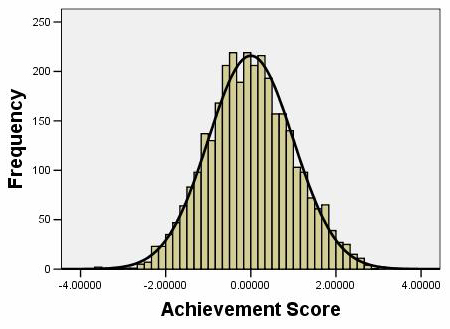
Note that Bartle's model doesn't propose an Achievement axis, but the same argument applies to the two underlying axes in his model. The 4 quadrants in his model only makes sense if most people do not all fall near the origin. Bartle's model is a classification model. A player fits in 1 of 4 boxes. The Components model is an assessment model. Every player has a score on each of the components.
To speed up load-times on multi-page articles, comments are now only loaded on the last page of an article.